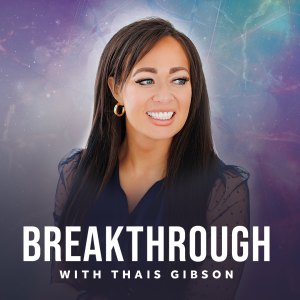
Breakthrough with Thais Gibson Podcast
Breakthrough with Thais Gibson is a podcast featuring live coaching and transformational conversations rooted in Integrated Attachment Theory. In each episode, Thais works directly with guests to uncover subconscious patterns, heal attachment wounds, and create meaningful emotional breakthroughs. Through vulnerable storytelling, practical tools, and deep emotional insight, listeners gain a powerful window into the healing process and learn how to build healthier relationships with themselves and others.
Listen on:

Episodes
Oct 7, 2026
Oct 7, 2026
21 min
How To Repair Relationships & Create Lasting Emotional Connectionhttps://offer.personaldevelopmentschool.com/relationship-repair?utm_source=podcast&utm_campaign=relationship-repair&utm_medium=organic&utm_content=pod-10-07-26&el=podcast
What does a securely attached relationship actually look and feel like—and how can you begin creating one if healthy relationships weren’t modeled for you growing up?
Becoming secure isn’t just about changing how you behave in relationships. It involves transforming the deeper wounds, emotional patterns, unmet needs, boundaries, and coping mechanisms that shape how you connect with yourself and the people you love.
In this episode, Thais Gibson breaks down six major pillars of becoming securely attached and explains how each one can transform your relationships. You’ll learn what happens as your triggers become less intense and less frequent, why knowing and communicating your needs is essential for healthy interdependence, and how secure boundaries can help you take up space without pushing others away.
Thais also explores how subconscious coping mechanisms—from anxious pursuit to avoidant shutdown—can begin to change as you heal the beliefs and emotional patterns underneath them. As you become more secure, you can build deeper connections where you feel seen, heard, understood, and safe enough to be vulnerable.
In This Episode, You’ll Learn:✔ The six overarching pillars of becoming securely attached✔ Why triggers can become less intense and less frequent as you heal✔ How emotional regulation changes your response to difficult situations✔ Why knowing and meeting your own needs is essential for healthy interdependence✔ How to become more comfortable communicating your needs to others✔ Why secure relationships leave room for other people to be imperfect✔ How to take up space instead of responding with anxious or avoidant coping patterns✔ The different boundary challenges of Dismissive Avoidant and Anxious Preoccupied attachment styles✔ Why healthy boundaries should be assertive rather than driven by anger✔ How subconscious coping behaviors can begin to change as you become secure✔ Why vulnerability creates deeper, higher-quality emotional connection✔ How communicating your needs, fears, and boundaries can strengthen trust
Timestamps:00:00 – What Does a Securely Attached Relationship Look Like?01:01 – The 6 Pillars of Becoming Secure01:26 – How Your Triggers Change as You Heal03:15 – Recovering Faster From Emotional Triggers04:35 – Core Wounds, Emotional Regulation & Your Needs05:09 – Building a Relationship With Your Needs05:33 – Communicating Your Needs to Others07:21 – Allowing People to Be Imperfect08:39 – Learning to Take Up Space in Relationships10:37 – What Relationship Triggers Can Teach You10:56 – Healthy Boundaries & Secure Attachment11:28 – Dismissive Avoidant vs. Anxious Preoccupied Boundaries13:14 – How to Set Boundaries Assertively14:28 – Changing Behavioral Coping Mechanisms16:34 – Anxious Pursuit & Avoidant Shutdown18:13 – Conflict, Vulnerability & Deeper Connection19:39 – Living From the Inside Out20:26 – How Vulnerability & Consideration Build Trust
Meet ThaisThais Gibson, PhD, is a Best-Selling Author, Pastoral Counselor, Relationship Coach, and the founder of The Personal Development School (PDS). Between 2013 and 2019, she developed Integrated Attachment Theory® (IAT), the Six-Step Method to Becoming Secure, a framework rooted in neuroscience, attachment theory, psychology, and spirituality, trademarked in October 2021. IAT works across six pillars:
✔ Rewire Your Attachment Core Wounds✔ Learn Your Attachment Needs✔ Regulate Your Nervous System Somatically✔ Learn Healthy Boundaries✔ Improve Communication✔ Rewire Your Unhealthy Protest Behaviors
Since opening in 2020, PDS has grown to serve over 70,000 students in 145 countries, achieving a 97% satisfaction rate and helping people reprogram their subconscious patterns and build thriving, secure relationships.
Helpful Resources:
🧠 Take the Free Attachment Style Quizhttps://attachment.personaldevelopmentschool.com/?utm_source=podcast&utm_campaign=attachment-quiz&utm_medium=organic&el=podcast
📘 Become an IAT Relationship Coachhttps://attachment.personaldevelopmentschool.com/iat?utm_source=podcast&utm_campaign=iat&utm_medium=organic&el=podcast
📚 Read the New Attachment Theory Bookhttps://attachment.personaldevelopmentschool.com/book/the-new-attachment-theory?utm_source=podcast&utm_campaign=the-new-attachment-theory&utm_medium=organic&el=podcast
🎧 Discover Podcast Episodeshttps://attachment.personaldevelopmentschool.com/podcast?utm_source=podcast&utm_campaign=podcast-page&utm_medium=organic&el=podcast
📝 Read the PDS Bloghttps://blog.personaldevelopmentschool.com/
Let’s Connect on Socials:📸 Instagram: https://www.instagram.com/thepersonaldevelopmentschool/📘 Facebook: https://www.facebook.com/ThePersonalDevelopmentSchool🎵 TikTok: https://www.tiktok.com/@thaisgibson💼 LinkedIn: https://www.linkedin.com/company/thepersonaldevelopmentschool/
#SecureAttachment #AttachmentStyles #AttachmentTheory #RelationshipRepair #HealthyRelationships #EmotionalConnection #AnxiousAttachment #DismissiveAvoidant #PersonalDevelopmentSchool
Ready to repair your relationship and create a stronger, lasting emotional connection?
Explore How To Repair Relationships & Create Lasting Emotional Connection:https://offer.personaldevelopmentschool.com/relationship-repair?utm_source=podcast&utm_campaign=relationship-repair&utm_medium=organic&utm_content=pod-10-07-26&el=podcast
Oct 5, 2026
Oct 5, 2026
10 min
Repair Any Relationship & Break Through The Power Struggle Phase https://offer.personaldevelopmentschool.com/relationship-repair?utm_source=podcast&utm_campaign=relationship-repair&utm_medium=organic&utm_content=pod-10-05-26&el=podcast
What happens when a Fearful Avoidant finally realizes you’re done trying?
When someone with a Fearful Avoidant attachment style senses that you’re no longer pursuing them, investing in the relationship, or waiting for them to come back, it can trigger a surprising emotional cycle. Their fear of abandonment may suddenly activate—even if they were previously the one creating distance.
In this episode, Thais Gibson breaks down four major stages a Fearful Avoidant may experience when they realize you’re truly pulling away. From abandonment fears and sudden pursuit to nostalgia and eventually rewriting the story of the relationship, you’ll learn what can be happening beneath the confusing hot-and-cold behavior.
If you’re a Fearful Avoidant yourself, this episode can also help you recognize the subconscious fears driving these patterns—including fears of abandonment, being trapped, helplessness, and unworthiness—and understand why healing these wounds is essential for creating healthier relationships.
In This Episode, You’ll Learn:• Why a Fearful Avoidant’s fear of abandonment can activate when you stop trying• Why Fearful Avoidants can swing from distancing themselves to suddenly pursuing you• Why pursuit doesn’t necessarily mean they’re ready to recommit to the relationship• How the Fearful Avoidant’s anxious and avoidant sides create hot-and-cold behavior• Why Fearful Avoidants may begin reminiscing and idealizing past memories after gaining distance• The questions they may ask themselves after a relationship ends• How subconscious fears of abandonment, entrapment, helplessness, and unworthiness influence relationships• Why Fearful Avoidants may eventually focus on everything that was wrong with the relationship• How healing underlying attachment wounds can help break painful push-pull patterns
Timestamps:00:00 – What Happens When a Fearful Avoidant Knows You’re Done00:58 – #1: Their Fear of Abandonment Activates01:44 – The Anxious & Avoidant Sides of the Fearful Avoidant02:50 – #2: They Swing Into Pursuit03:28 – Pursuit Doesn’t Always Mean They Want the Relationship Back04:03 – Thais’ Personal Fearful Avoidant Experience05:13 – How Push-Pull Patterns Affect Other People06:20 – How Fearful Avoidant Patterns Spill Into Other Areas of Life07:24 – #3: Reminiscing & Nostalgia08:50 – #4: Rewriting the Story09:39 – How the Fearful Avoidant Finally Moves On
Meet ThaisThais Gibson, PhD, is a Best-Selling Author, Pastoral Counselor, Relationship Coach, and the founder of The Personal Development School (PDS). Between 2013 and 2019, she developed Integrated Attachment Theory® (IAT), the Six-Step Method to Becoming Secure, a framework rooted in neuroscience, attachment theory, psychology, and spirituality, trademarked in October 2021. IAT works across six pillars:
✔ Rewire Your Attachment Core Wounds✔ Learn Your Attachment Needs✔ Regulate Your Nervous System Somatically✔ Learn Healthy Boundaries✔ Improve Communication✔ Rewire Your Unhealthy Protest Behaviors
Since opening in 2020, PDS has grown to serve over 70,000 students in 145 countries, achieving a 97% satisfaction rate and helping people reprogram their subconscious patterns and build thriving, secure relationships.
Helpful Resources:
🧠 Take the Free Attachment Style Quizhttps://attachment.personaldevelopmentschool.com/?utm_source=podcast&utm_campaign=attachment-quiz&utm_medium=organic&el=podcast
📘 Become an IAT Relationship Coachhttps://attachment.personaldevelopmentschool.com/iat?utm_source=podcast&utm_campaign=iat&utm_medium=organic&el=podcast
📚 Read the New Attachment Theory Bookhttps://attachment.personaldevelopmentschool.com/book/the-new-attachment-theory?utm_source=podcast&utm_campaign=the-new-attachment-theory&utm_medium=organic&el=podcast
🎧 Discover Podcast Episodeshttps://attachment.personaldevelopmentschool.com/podcast?utm_source=podcast&utm_campaign=podcast-page&utm_medium=organic&el=podcast
📝 Read the PDS Bloghttps://blog.personaldevelopmentschool.com/
Let’s Connect on Socials:📸 Instagram: https://www.instagram.com/thepersonaldevelopmentschool/📘 Facebook: https://www.facebook.com/ThePersonalDevelopmentSchool🎵 TikTok: https://www.tiktok.com/@thaisgibson💼 LinkedIn: https://www.linkedin.com/company/thepersonaldevelopmentschool/
Oct 3, 2026
Oct 3, 2026
1 hr 9 min
Access Our Courses and the Worksheets Mentioned in This Episode, With a Trial to the Personal Development School:https://attachment.personaldevelopmentschool.com/dream-life?utm_source=podcast&utm_campaign=7-day-trial&utm_medium=organic&utm_content=yt-10-03-26&el=podcast
Have you ever walked away from someone who wasn’t showing up for you—only to immediately wonder if you gave up too soon?
That guilt doesn’t necessarily mean you made the wrong decision. Sometimes, it comes from a deeply ingrained pattern of putting other people’s feelings, needs, and experiences ahead of your own.
In this episode, Thais Gibson sits down with Brian to explore rebuilding trust in relationships, navigating hypervigilance while dating, and learning how to honor your boundaries without weaponizing your empathy against yourself.
They unpack why noticing every subtle shift in someone’s behavior can make dating feel exhausting, how over-adapting can lead to self-abandonment, and why healthy relationships require you to consider your own feelings and needs just as much as you consider someone else’s.
You’ll also learn practical exercises for working through chronic guilt, strengthening your relationship with your boundaries, and becoming more rooted in yourself while dating.
In This Episode, You’ll Learn:• Why hypervigilance can make dating and relationships feel confusing• How to distinguish observation from overanalysis• Why “matching someone’s energy” can pull you away from your authentic self• How empathy can become a trap when you stop considering your own needs• Why repeatedly abandoning your boundaries can reinforce betrayal wounds• How to communicate needs without trying to control another person• Why incompatibility doesn’t mean either person is bad or lacking value• How to recognize when you’ve genuinely tried enough in a relationship• A daily guilt and boundary practice for reducing self-abandonment• How to identify and communicate your core relationship needs
TIMESTAMPS
00:00 – When Giving Someone Another Chance Stops Feeling Authentic01:29 – Why Guilt Doesn’t Mean You Made the Wrong Decision04:30 – How Hypervigilance Shows Up in Dating08:37 – How Much Communication Is Reasonable in Early Dating?16:07 – Why “Matching Their Energy” Can Become a Trap22:38 – How You Can Weaponize Your Empathy Against Yourself27:12 – The Connection Between Guilt, Shame, and Abandonment35:44 – How Self-Betrayal Keeps Betrayal Wounds Alive38:58 – The Daily Guilt and Boundary Practice42:11 – 5 Core Needs to Look for in a Relationship52:18 – When Should You Communicate Your Needs?56:35 – The Daily Practice for Ending Self-Betrayal
Meet ThaisThais Gibson, PhD, is a Best-Selling Author, Pastoral Counselor, Relationship Coach, and the founder of The Personal Development School (PDS). Between 2013 and 2019, she developed Integrated Attachment Theory® (IAT), the Six-Step Method to Becoming Secure, a framework rooted in neuroscience, attachment theory, psychology, and spirituality, trademarked in October 2021. IAT works across six pillars:
✔ Rewire Your Attachment Core Wounds✔ Learn Your Attachment Needs✔ Regulate Your Nervous System Somatically✔ Learn Healthy Boundaries✔ Improve Communication✔ Rewire Your Unhealthy Protest Behaviors
Since opening in 2020, PDS has grown to serve over 70,000 students in 145 countries, achieving a 97% satisfaction rate and helping people reprogram their subconscious patterns and build thriving, secure relationships.
Helpful Resources:
🧠 Take the Free Attachment Style Quizhttps://attachment.personaldevelopmentschool.com/?utm_source=podcast&utm_campaign=attachment-quiz&utm_medium=organic&el=podcast
📘 Become an IAT Relationship Coachhttps://attachment.personaldevelopmentschool.com/iat?utm_source=podcast&utm_campaign=iat&utm_medium=organic&el=podcast
📚 Read the New Attachment Theory Bookhttps://attachment.personaldevelopmentschool.com/book/the-new-attachment-theory?utm_source=podcast&utm_campaign=the-new-attachment-theory&utm_medium=organic&el=podcast
🎧 Discover Podcast Episodeshttps://attachment.personaldevelopmentschool.com/podcast?utm_source=podcast&utm_campaign=podcast-page&utm_medium=organic&el=podcast
📝 Read the PDS Bloghttps://blog.personaldevelopmentschool.com/
Let’s Connect on Socials:📸 Instagram: https://www.instagram.com/thepersonaldevelopmentschool/📘 Facebook: https://www.facebook.com/ThePersonalDevelopmentSchool🎵 TikTok: https://www.tiktok.com/@thaisgibson💼 LinkedIn: https://www.linkedin.com/company/thepersonaldevelopmentschool/
Oct 2, 2026
Oct 2, 2026
11 min
Learn Somatic Tools to Regulate Emotions, Heal Triggers & Calm Your Nervous System:https://attachment.personaldevelopmentschool.com/somatic-attachment-healing?utm_source=podcast&utm_campaign=somatic-attachment-healing&utm_medium=organic&utm_content=yt-10-02-26&el=podcast
Do you find yourself criticizing, judging, or shaming yourself when you make a mistake? Sometimes, the way we speak to ourselves can reinforce a painful punishment-and-reward cycle, where we only allow ourselves to feel good enough when we believe we’ve done something “right.”
In this guided process, Thais Gibson takes you through an exercise designed to help you reconnect with yourself, practice self-compassion, and begin humanizing yourself again.
Rather than simply judging yourself for a mistake or regret, you’ll be guided to look beneath the surface. You’ll explore the emotions, beliefs, fears, and patterns that may have contributed to what happened, and practice seeing yourself with greater empathy and understanding.
This process isn’t about avoiding accountability. It’s about learning how to take responsibility while also recognizing what was happening internally, so you can understand what needs healing and approach growth from a place of compassion rather than shame.
You’ll Learn:❤️ How self-judgment can affect your relationship with yourself❤️ How to notice emotions and sensations connected to a difficult memory❤️ How to explore the beliefs, fears, and patterns behind past mistakes❤️ How to see yourself from a more compassionate perspective❤️ How to replace shame and harsh self-talk with empathy❤️ How to identify what you may need to heal or work on moving forward❤️ How self-compassion and accountability can exist together
Timestamps:00:00 — What Is a Guided Process?00:26 — Reparenting & Humanizing Yourself00:57 — Breaking the Cycle of Self-Criticism01:48 — Compassion, Accountability & Growth02:47 — Guided Process Begins03:26 — Revisiting a Mistake or Regret03:55 — Noticing Your Emotions & Body Sensations04:45 — Recognizing Self-Judgment05:49 — Understanding What Led to the Mistake06:32 — Exploring Your Thoughts & Beliefs07:12 — Seeing Yourself as a Human Being07:54 — Practicing Empathy Toward Yourself08:10 — Choosing Compassion Over Shame09:11 — What Do You Need From Yourself?09:43 — Taking Responsibility at the Root10:13 — Identifying What You Can Improve10:56 — A Final Moment of Self-Compassion
Meet ThaisThais Gibson, PhD, is a Best-Selling Author, Pastoral Counselor, Relationship Coach, and the founder of The Personal Development School (PDS). Between 2013 and 2019, she developed Integrated Attachment Theory® (IAT), the Six-Step Method to Becoming Secure, a framework rooted in neuroscience, attachment theory, psychology, and spirituality, trademarked in October 2021. IAT works across six pillars:
✔ Rewire Your Attachment Core Wounds✔ Learn Your Attachment Needs✔ Regulate Your Nervous System Somatically✔ Learn Healthy Boundaries✔ Improve Communication✔ Rewire Your Unhealthy Protest Behaviors
Since opening in 2020, PDS has grown to serve over 70,000 students in 145 countries, achieving a 97% satisfaction rate and helping people reprogram their subconscious patterns and build thriving, secure relationships.
Helpful Resources:🧠 Take the Free Attachment Style Quizhttps://attachment.personaldevelopmentschool.com/?utm_source=podcast&utm_campaign=attachment-quiz&utm_medium=organic&el=podcast
📘 Become an IAT Relationship Coachhttps://attachment.personaldevelopmentschool.com/iat?utm_source=podcast&utm_campaign=iat&utm_medium=organic&el=podcast
📚 Read the New Attachment Theory Bookhttps://attachment.personaldevelopmentschool.com/book/the-new-attachment-theory?utm_source=podcast&utm_campaign=the-new-attachment-theory&utm_medium=organic&el=podcast
🎧 Discover Podcast Episodeshttps://attachment.personaldevelopmentschool.com/podcast?utm_source=podcast&utm_campaign=podcast-page&utm_medium=organic&el=podcast
📝 Read the PDS Bloghttps://blog.personaldevelopmentschool.com/
Let’s Connect on Socials:📸 Instagram: https://www.instagram.com/thepersonaldevelopmentschool/
📘 Facebook: https://www.facebook.com/ThePersonalDevelopmentSchool
🎵 TikTok: https://www.tiktok.com/@thaisgibson
💼 LinkedIn: https://www.linkedin.com/company/thepersonaldevelopmentschool/
Sep 30, 2026
Sep 30, 2026
13 min
Start Healing Core Wounds with Our Reparent Your Inner Child Course, Free with a 7-Day Trial to the Personal Development Schoolhttps://offer.personaldevelopmentschool.com/reparenting-your-inner-child?utm_source=podcast&utm_campaign=reparenting-your-inner-child&utm_medium=organic&utm_content=pod-09-30-26&el=podcast
Why can certain relationship triggers feel so overwhelming for a Fearful Avoidant—and why can the instinct to shut down, get angry, or push someone away feel almost impossible to control?
Often, underneath these reactions are deeply wounded and unmet needs that have never been fully resolved.
In this episode, Thais Gibson explores the Fearful Avoidant attachment style and the process of reparenting wounded needs. You’ll learn how unmet childhood needs can create coping mechanisms that continue into adulthood, why certain triggers can make you feel younger or more emotionally reactive, and how these patterns may contribute to relationship self-sabotage.
Thais breaks down some of the Fearful Avoidant’s most significant needs—including safety, trust, feeling seen, heard, understood, worthy of love, and having freedom and autonomy. She also explains why the moments when you most want to push someone away can point toward a deeper wound asking for your attention.
Most importantly, you’ll learn how to turn inward and begin meeting these needs in your relationship with yourself so you can create greater self-trust, self-compassion, and healthier relationship patterns.
In This Episode, You’ll Learn:✔ How deeply unmet needs can create coping mechanisms✔ Why unresolved needs can make emotional reactions feel young, desperate, or childlike✔ The Fearful Avoidant’s wounded needs for safety and trust✔ Why feeling seen, heard, understood, and worthy of love can be especially important✔ The Fearful Avoidant’s need for freedom and autonomy✔ Why intense anger, hurt, resentment, and abandonment fears can signal wounded needs✔ Why pushing someone away can actually be an attempt to push emotional pain away✔ How breaking trust with yourself can magnify trust wounds with other people✔ Why relying entirely on another person to heal your unmet needs can create unhealthy patterns✔ How to identify where you may be abandoning or betraying yourself✔ How tracking your daily behaviors can reveal wounds and unmet needs✔ How to identify what you desperately want from others and begin giving it to yourself✔ Why self-compassion and a healthier internal dialogue are important parts of reparenting✔ How to identify the unmet need underneath your urge to push someone away
Timestamps:00:00 – Fearful Avoidants & Reparenting Wounded Needs00:44 – How Unmet Needs Create Coping Mechanisms01:29 – Why Wounded Needs Can Make You Feel Younger02:24 – Safety & Trust as Wounded Needs03:25 – Feeling Seen, Heard, Understood & Worthy of Love04:37 – The Need for Freedom & Autonomy04:46 – How to Recognize Your Wounded Needs05:37 – Why Fearful Avoidants Push People Away06:18 – The Pain Underneath Anger & Shutdown07:03 – What Your Deepest Triggers Are Showing You07:47 – Rebuilding Trust With Yourself09:10 – Why Healing Has to Begin Within10:15 – Questions to Identify Your Core Wounds10:58 – Tracking Your Behaviors & Unmet Needs11:28 – What Do You Deeply Desire From Others?12:09 – Reparenting Through Self-Compassion12:52 – Finding the Need Beneath Pushing Someone Away
Meet ThaisThais Gibson, PhD, is a Best-Selling Author, Pastoral Counselor, Relationship Coach, and the founder of The Personal Development School (PDS). Between 2013 and 2019, she developed Integrated Attachment Theory® (IAT), the Six-Step Method to Becoming Secure, a framework rooted in neuroscience, attachment theory, psychology, and spirituality, trademarked in October 2021. IAT works across six pillars:
✔ Rewire Your Attachment Core Wounds✔ Learn Your Attachment Needs✔ Regulate Your Nervous System Somatically✔ Learn Healthy Boundaries✔ Improve Communication✔ Rewire Your Unhealthy Protest Behaviors
Since opening in 2020, PDS has grown to serve over 70,000 students in 145 countries, achieving a 97% satisfaction rate and helping people reprogram their subconscious patterns and build thriving, secure relationships.
Helpful Resources:
🧠 Take the Free Attachment Style Quizhttps://attachment.personaldevelopmentschool.com/?utm_source=podcast&utm_campaign=attachment-quiz&utm_medium=organic&el=podcast
📘 Become an IAT Relationship Coachhttps://attachment.personaldevelopmentschool.com/iat?utm_source=podcast&utm_campaign=iat&utm_medium=organic&el=podcast
📚 Read the New Attachment Theory Bookhttps://attachment.personaldevelopmentschool.com/book/the-new-attachment-theory?utm_source=podcast&utm_campaign=the-new-attachment-theory&utm_medium=organic&el=podcast
🎧 Discover Podcast Episodeshttps://attachment.personaldevelopmentschool.com/podcast?utm_source=podcast&utm_campaign=podcast-page&utm_medium=organic&el=podcast
📝 Read the PDS Bloghttps://blog.personaldevelopmentschool.com/
Let’s Connect on Socials:📸 Instagram: https://www.instagram.com/thepersonaldevelopmentschool/📘 Facebook: https://www.facebook.com/ThePersonalDevelopmentSchool🎵 TikTok: https://www.tiktok.com/@thaisgibson💼 LinkedIn: https://www.linkedin.com/company/thepersonaldevelopmentschool/
#FearfulAvoidant #FearfulAvoidantAttachment #InnerChildHealing #Reparenting #CoreWounds #AttachmentStyles #AttachmentTheory #HealingJourney #PersonalDevelopmentSchool
Ready to start healing your core wounds and reparenting your wounded needs?
Explore Reparent Your Inner Child, free with a 7-day trial to the Personal Development School:https://offer.personaldevelopmentschool.com/reparenting-your-inner-child?utm_source=podcast&utm_campaign=reparenting-your-inner-child&utm_medium=organic&utm_content=pod-09-30-26&el=podcast
Sep 28, 2026
Sep 28, 2026
14 min
Start Healing Core Wounds with Our Reparent Your Inner Child Course, Free with a 7-Day Trial to the Personal Development Schoolhttps://offer.personaldevelopmentschool.com/reparenting-your-inner-child?utm_source=podcast&utm_campaign=reparenting-your-inner-child&utm_medium=organic&utm_content=pod-09-28-26&el=podcast
Have you ever noticed that certain emotional triggers make you suddenly feel younger, overwhelmed, or unsure how to meet your own needs?
When important needs go unmet in childhood, we may grow into adulthood without developing the emotional skills, boundaries, or self-connection needed in those specific areas. That’s where reparenting can become an important part of the healing process.
In this episode, Thais Gibson explores what reparenting means, how childhood parenting experiences can influence our adult patterns, and how we can begin showing up for the wounded parts of ourselves differently.
Thais explains how this can look across attachment styles. A Dismissive Avoidant who experienced emotional neglect may struggle to identify, process, or communicate their feelings. An Anxious Preoccupied individual with abandonment wounds may repeatedly abandon their own feelings and needs while focusing on everyone else.
You’ll also learn a practical starting point for reparenting: using emotional triggers and unwanted behavioral patterns as feedback. By identifying what you feel, where you feel it in your body, what need is underneath the emotion, and how you can meet that need in a healthier way, you can begin building the skills that may have been missing earlier in life.
In This Episode, You’ll Learn:✔ What reparenting means and how it relates to unmet childhood needs✔ Why certain parts of our emotional development can feel “stuck” around old wounds✔ How childhood experiences can influence the way we treat ourselves as adults✔ How emotional neglect can affect a Dismissive Avoidant’s relationship with their emotions✔ How abandonment wounds can influence an Anxious Preoccupied individual’s relationship with their own needs✔ Why childhood modeling can shape subconscious relationship patterns✔ The four major parenting styles discussed in the episode✔ Why emotional pain can be used as feedback for healing✔ Why a secure partner or therapist cannot replace the work of learning to meet your own needs✔ How to recognize, label, and locate emotions in your body✔ How to uncover the unmet need underneath an emotional trigger✔ Why self-sabotaging behaviors may have started as survival behaviors✔ How to replace outdated coping patterns with healthier ways of meeting your needs
Timestamps:00:00 – Reparenting & Childhood Parenting Styles00:59 – What Is Reparenting?01:41 – Learning to Reparent Yourself02:28 – How Unmet Childhood Needs Affect Adult Growth03:17 – Dismissive Avoidant Attachment & Emotional Neglect05:04 – Reparenting Emotional Wounds05:24 – Anxious Preoccupied Attachment & Abandonment06:59 – How Childhood Modeling Shapes Our Patterns08:07 – Why Old Wounds Can Make You Feel Like a Child08:43 – The 4 Major Parenting Styles10:25 – Using Emotional Pain as Feedback11:14 – Can a Secure Relationship Help You Heal?11:37 – Why You Still Need to Reparent Yourself12:23 – A Practical Reparenting Exercise13:19 – Identify the Need Beneath the Trigger13:30 – Self-Sabotaging Behaviors as Survival Strategies14:07 – Behaviors, Unmet Needs & Reparenting
Meet ThaisThais Gibson, PhD, is a Best-Selling Author, Pastoral Counselor, Relationship Coach, and the founder of The Personal Development School (PDS). Between 2013 and 2019, she developed Integrated Attachment Theory® (IAT), the Six-Step Method to Becoming Secure, a framework rooted in neuroscience, attachment theory, psychology, and spirituality, trademarked in October 2021. IAT works across six pillars:
✔ Rewire Your Attachment Core Wounds✔ Learn Your Attachment Needs✔ Regulate Your Nervous System Somatically✔ Learn Healthy Boundaries✔ Improve Communication✔ Rewire Your Unhealthy Protest Behaviors
Since opening in 2020, PDS has grown to serve over 70,000 students in 145 countries, achieving a 97% satisfaction rate and helping people reprogram their subconscious patterns and build thriving, secure relationships.
Helpful Resources:
🧠 Take the Free Attachment Style Quizhttps://attachment.personaldevelopmentschool.com/?utm_source=podcast&utm_campaign=attachment-quiz&utm_medium=organic&el=podcast
📘 Become an IAT Relationship Coachhttps://attachment.personaldevelopmentschool.com/iat?utm_source=podcast&utm_campaign=iat&utm_medium=organic&el=podcast
📚 Read the New Attachment Theory Bookhttps://attachment.personaldevelopmentschool.com/book/the-new-attachment-theory?utm_source=podcast&utm_campaign=the-new-attachment-theory&utm_medium=organic&el=podcast
🎧 Discover Podcast Episodeshttps://attachment.personaldevelopmentschool.com/podcast?utm_source=podcast&utm_campaign=podcast-page&utm_medium=organic&el=podcast
📝 Read the PDS Bloghttps://blog.personaldevelopmentschool.com/
Let’s Connect on Socials:📸 Instagram: https://www.instagram.com/thepersonaldevelopmentschool/📘 Facebook: https://www.facebook.com/ThePersonalDevelopmentSchool🎵 TikTok: https://www.tiktok.com/@thaisgibson💼 LinkedIn: https://www.linkedin.com/company/thepersonaldevelopmentschool/
#InnerChildHealing #Reparenting #CoreWounds #AttachmentStyles #AttachmentTheory #DismissiveAvoidant #AnxiousPreoccupied #EmotionalHealing #PersonalDevelopmentSchool
Ready to start healing core wounds and build a healthier relationship with yourself?
Explore Reparent Your Inner Child, free with a 7-day trial to the Personal Development School:https://offer.personaldevelopmentschool.com/reparenting-your-inner-child?utm_source=podcast&utm_campaign=reparenting-your-inner-child&utm_medium=organic&utm_content=pod-09-28-26&el=podcast
Sep 25, 2026
Sep 25, 2026
10 min
How To Repair Relationships & Create Lasting Emotional Connectionhttps://offer.personaldevelopmentschool.com/relationship-repair?utm_source=podcast&utm_campaign=relationship-repair&utm_medium=organic&utm_content=pod-09-25-26&el=podcast
Have you ever received an apology that sounded like the right words—but somehow still didn’t feel sincere?
Maybe you heard, “I’m sorry you feel that way,” a dismissive “Sorry, can we move on?” or an apology immediately followed by blame. These responses can leave you feeling unheard, misunderstood, and even more disconnected than before the conversation began.
In this episode, Thais Gibson breaks down five types of apologies that can feel emotionally manipulative or insincere, why people may communicate this way, and what a healthy apology actually looks like.
You’ll learn why a sincere apology requires more than simply saying “sorry.” Thais explains the importance of acknowledging emotions, becoming genuinely curious about the other person’s experience, and finding a solution that addresses the underlying problem. She also shares how to validate someone’s feelings without accepting unhealthy behavior—and how to set boundaries that support healthier communication going forward.
In This Episode, You’ll Learn:✔ 5 common types of emotionally manipulative or insincere apologies✔ Why “I’m sorry you feel that way” can feel invalidating and deflect responsibility✔ How Avoidant Attachment patterns can sometimes turn “sorry” into a way of escaping conflict✔ Why “Sorry, but you…” prevents both sides of a conflict from being properly resolved✔ How to respond when someone uses your past behavior to justify hurting you✔ Why an apology delivered with attitude usually fails to repair emotional connection✔ Why unresolved conflicts from the past tend to keep resurfacing✔ How to acknowledge someone’s emotions without accepting unhealthy behavior✔ The key ingredients that make an apology feel sincere✔ How curiosity, understanding, boundaries, and solutions can help repair a relationship
Timestamps:00:00 – Why Some Apologies Don’t Feel Sincere01:10 – #1: “I’m Sorry You Feel That Way”02:45 – #2: Saying Sorry to Avoid the Conflict04:01 – #3: “Sorry, But You…”05:17 – How to Respond to Blame During an Apology05:59 – #4: Saying Sorry With an Attitude06:30 – A Healthier Way to Respond During Conflict06:53 – #5: “Forget About the Past”07:37 – What a Healthy Apology Actually Looks Like07:39 – Acknowledge the Other Person’s Feelings08:08 – Validating Feelings While Maintaining Boundaries09:08 – Curiosity, Understanding & Finding a Solution09:36 – Resolving a Two-Way Conflict
Meet ThaisThais Gibson, PhD, is a Best-Selling Author, Pastoral Counselor, Relationship Coach, and the founder of The Personal Development School (PDS). Between 2013 and 2019, she developed Integrated Attachment Theory® (IAT), the Six-Step Method to Becoming Secure, a framework rooted in neuroscience, attachment theory, psychology, and spirituality, trademarked in October 2021. IAT works across six pillars:
✔ Rewire Your Attachment Core Wounds✔ Learn Your Attachment Needs✔ Regulate Your Nervous System Somatically✔ Learn Healthy Boundaries✔ Improve Communication✔ Rewire Your Unhealthy Protest Behaviors
Since opening in 2020, PDS has grown to serve over 70,000 students in 145 countries, achieving a 97% satisfaction rate and helping people reprogram their subconscious patterns and build thriving, secure relationships.
Helpful Resources:
🧠 Take the Free Attachment Style Quizhttps://attachment.personaldevelopmentschool.com/?utm_source=podcast&utm_campaign=attachment-quiz&utm_medium=organic&el=podcast
📘 Become an IAT Relationship Coachhttps://attachment.personaldevelopmentschool.com/iat?utm_source=podcast&utm_campaign=iat&utm_medium=organic&el=podcast
📚 Read the New Attachment Theory Bookhttps://attachment.personaldevelopmentschool.com/book/the-new-attachment-theory?utm_source=podcast&utm_campaign=the-new-attachment-theory&utm_medium=organic&el=podcast
🎧 Discover Podcast Episodeshttps://attachment.personaldevelopmentschool.com/podcast?utm_source=podcast&utm_campaign=podcast-page&utm_medium=organic&el=podcast
📝 Read the PDS Bloghttps://blog.personaldevelopmentschool.com/
Let’s Connect on Socials:📸 Instagram: https://www.instagram.com/thepersonaldevelopmentschool/📘 Facebook: https://www.facebook.com/ThePersonalDevelopmentSchool🎵 TikTok: https://www.tiktok.com/@thaisgibson💼 LinkedIn: https://www.linkedin.com/company/thepersonaldevelopmentschool/
#RelationshipRepair #HealthyCommunication #Apology #ConflictResolution #AttachmentStyles #AttachmentTheory #HealthyRelationships #RelationshipAdvice #PersonalDevelopmentSchool
Ready to repair your relationship and create a stronger, lasting emotional connection?
Explore How To Repair Relationships & Create Lasting Emotional Connection:https://offer.personaldevelopmentschool.com/relationship-repair?utm_source=podcast&utm_campaign=relationship-repair&utm_medium=organic&utm_content=pod-09-25-26&el=podcast
Sep 23, 2026
Sep 23, 2026
39 min
What if raising emotionally healthy children begins not with changing them, but with becoming more conscious of ourselves?
In this powerful conversation, Dr. Shefali, clinical psychologist, New York Times bestselling author, and founder of the Conscious Parenting movement, joins us to explore a different way of raising the next generation.
With the launch of her new books, Raising Conscious Daughters and Raising Conscious Sons, Dr. Shefali examines the unique pressures facing girls and boys today, from perfectionism, people-pleasing, and body image to emotional suppression, loneliness, digital immersion, and changing ideas of masculinity.
She shares why conscious parenting begins with examining our own fears, expectations, and unresolved emotional patterns, and how easily those patterns can be projected onto our children. Instead of trying to mold children into who we think they should become, Dr. Shefali encourages parents to listen, attune, and create the safety children need to discover who they already are.
We also explore the impact of social media, gaming, AI, and constant digital stimulation; why children sometimes disconnect from their authentic selves to maintain connection with their parents; how boys and girls may express emotional struggles differently; and why presence, validation, play, boundaries, and genuine connection matter more than perfection.
Whether you’re raising a daughter, a son, or simply want to better understand the emotional world of the next generation, this conversation offers a compassionate invitation to rethink what it means to parent consciously.
In this episode, you’ll learn:• Why conscious parenting starts with the parent’s own inner work• How expectations can unintentionally disconnect children from their authentic selves• Why girls may turn toward perfectionism and approval, while boys may hide vulnerability or withdraw• How digital culture is changing the emotional landscape of childhood• Ways to help children develop confidence, boundaries, resilience, and inner authority• Why connection before correction can transform the parent-child relationship• How parents can reconnect with their children, even when they wish they had started sooner• Why play, boredom, autonomy, and emotional safety remain essential parts of childhood
Get Dr. Shefali’s new books:Raising Conscious Daughters & Raising Conscious Sonshttps://www.drshefali.com/raisingconscious-daughters-sons/
About Dr. Shefali:Dr. Shefali is a clinical psychologist, a New York Times bestselling author, and the founder of the Conscious Parenting movement, redefining how families understand selfhood, connection, and the inner life of children. She works where psychology meets consciousness, tracing the hidden forces that shape identity, relationships, and the way we inhabit the world. Trained at Columbia University, she has spent decades guiding families to move beyond patterns of control and fear toward presence and authenticity.
#DrShefali #ConsciousParenting #RaisingConsciousDaughters #RaisingConsciousSons #Parenting #ParentingTips #EmotionalIntelligence #ConsciousParent
Sep 21, 2026
Sep 21, 2026
6 min
How To Repair Relationships & Create Lasting Emotional Connection https://offer.personaldevelopmentschool.com/relationship-repair?utm_source=podcast&utm_campaign=relationship-repair&utm_medium=organic&utm_content=pod-09-21-26&el=podcast
What if rebuilding trust in your relationships isn’t only about learning to trust other people—but also about rebuilding trust with yourself?
Trust can erode when someone repeatedly breaks promises, fails to follow through, or doesn’t consider our needs. But sometimes, our past relationship experiences can also shape an internal “trust baseline,” causing us to expect abandonment, dishonesty, betrayal, or vulnerability to be unsafe—even when a current relationship isn’t repeating those patterns.
In this episode, Thais Gibson reveals an often-overlooked ingredient in repairing trust: the relationship you have with yourself.
You’ll learn how broken self-trust can show up through ignored boundaries, unmet needs, lack of follow-through, negative self-talk, and even avoiding truths you know you need to face. Thais also shares a practical exercise for identifying where your biggest trust triggers with others may point toward areas where you need to rebuild trust within yourself.
In This Episode, You’ll Learn:✔ Why congruency and consideration are essential components of trust✔ How past experiences can shape your internal trust baseline✔ How trust wounds can differ across attachment styles✔ The connection between distrust of others and broken self-trust✔ How ignoring your boundaries and needs can erode trust in yourself✔ Why keeping promises to yourself matters✔ How negative self-talk can become a breach of self-trust✔ A simple exercise for uncovering areas where self-trust needs repair✔ How stronger self-trust can help you respond differently when others violate your trust
Timestamps:00:00 – The Hidden Ingredient to Rebuilding Trust00:24 – How Trust Breaks Down in Relationships01:04 – Reprogramming Your Internal Trust Baseline01:59 – Trust Wounds Across Attachment Styles02:51 – The Overlooked Role of Self-Trust03:34 – Boundaries, Needs & Breaking Your Own Trust04:30 – Building Congruency With Yourself05:21 – An Exercise for Identifying Broken Self-Trust06:03 – How Self-Trust Helps You Feel Safer in Relationships
Meet ThaisThais Gibson, PhD, is a Best-Selling Author, Pastoral Counselor, Relationship Coach, and the founder of The Personal Development School (PDS). Between 2013 and 2019, she developed Integrated Attachment Theory® (IAT), the Six-Step Method to Becoming Secure, a framework rooted in neuroscience, attachment theory, psychology, and spirituality, trademarked in October 2021. IAT works across six pillars:
✔ Rewire Your Attachment Core Wounds✔ Learn Your Attachment Needs✔ Regulate Your Nervous System Somatically✔ Learn Healthy Boundaries✔ Improve Communication✔ Rewire Your Unhealthy Protest Behaviors
Since opening in 2020, PDS has grown to serve over 70,000 students in 145 countries, achieving a 97% satisfaction rate and helping people reprogram their subconscious patterns and build thriving, secure relationships.
Helpful Resources:
🧠 Take the Free Attachment Style Quizhttps://attachment.personaldevelopmentschool.com/?utm_source=podcast&utm_campaign=attachment-quiz&utm_medium=organic&el=podcast
📘 Become an IAT Relationship Coachhttps://attachment.personaldevelopmentschool.com/iat?utm_source=podcast&utm_campaign=iat&utm_medium=organic&el=podcast
📚 Read the New Attachment Theory Bookhttps://attachment.personaldevelopmentschool.com/book/the-new-attachment-theory?utm_source=podcast&utm_campaign=the-new-attachment-theory&utm_medium=organic&el=podcast
🎧 Discover Podcast Episodeshttps://attachment.personaldevelopmentschool.com/podcast?utm_source=podcast&utm_campaign=podcast-page&utm_medium=organic&el=podcast
📝 Read the PDS Bloghttps://blog.personaldevelopmentschool.com/
Let’s Connect on Socials:📸 Instagram: https://www.instagram.com/thepersonaldevelopmentschool/📘 Facebook: https://www.facebook.com/ThePersonalDevelopmentSchool🎵 TikTok: https://www.tiktok.com/@thaisgibson💼 LinkedIn: https://www.linkedin.com/company/thepersonaldevelopmentschool/
#TrustIssues #RebuildingTrust #SelfTrust #AttachmentStyles #AttachmentTheory #HealthyRelationships #RelationshipAdvice #PersonalDevelopmentSchool
Sep 18, 2026
Sep 18, 2026
9 min
How To Repair Relationships & Create Lasting Emotional Connection https://offer.personaldevelopmentschool.com/relationship-repair?utm_source=podcast&utm_campaign=relationship-repair&utm_medium=organic&utm_content=pod-09-18-26&el=podcast
When an Anxious Preoccupied and Dismissive Avoidant come together, their different attachment patterns can create challenges that leave both partners feeling misunderstood.
So, how can you begin repairing the relationship and move toward a healthier, more secure connection?
In this episode, Thais Gibson explores relationship repair through the lens of Anxious Preoccupied and Dismissive Avoidant attachment styles. Discover how understanding your attachment patterns can give you greater insight into the dynamics playing out between you and your partner—and help you approach your relationship with more awareness.
Whether you identify as Anxious Preoccupied, Dismissive Avoidant, or you’re trying to better understand someone you love, this episode offers an attachment-focused perspective on repairing your relationship and creating a healthier dynamic.
In This Episode:✔ Anxious Preoccupied & Dismissive Avoidant attachment dynamics✔ Understanding your attachment patterns in relationships✔ Recognizing the differences between these two attachment styles✔ Looking at relationship challenges through the lens of attachment✔ Moving toward healthier, more secure relationship patterns✔ Building greater awareness in your relationship
Meet ThaisThais Gibson, PhD, is a Best-Selling Author, Pastoral Counselor, Relationship Coach, and the founder of The Personal Development School (PDS). Between 2013 and 2019, she developed Integrated Attachment Theory® (IAT), the Six-Step Method to Becoming Secure, a framework rooted in neuroscience, attachment theory, psychology, and spirituality, trademarked in October 2021. IAT works across six pillars:
✔ Rewire Your Attachment Core Wounds✔ Learn Your Attachment Needs✔ Regulate Your Nervous System Somatically✔ Learn Healthy Boundaries✔ Improve Communication✔ Rewire Your Unhealthy Protest Behaviors
Since opening in 2020, PDS has grown to serve over 70,000 students in 145 countries, achieving a 97% satisfaction rate and helping people reprogram their subconscious patterns and build thriving, secure relationships.
Helpful Resources:
🧠 Take the Free Attachment Style Quizhttps://attachment.personaldevelopmentschool.com/?utm_source=podcast&utm_campaign=attachment-quiz&utm_medium=organic&el=podcast
📘 Become an IAT Relationship Coachhttps://attachment.personaldevelopmentschool.com/iat?utm_source=podcast&utm_campaign=iat&utm_medium=organic&el=podcast
📚 Read the New Attachment Theory Bookhttps://attachment.personaldevelopmentschool.com/book/the-new-attachment-theory?utm_source=podcast&utm_campaign=the-new-attachment-theory&utm_medium=organic&el=podcast
🎧 Discover Podcast Episodeshttps://attachment.personaldevelopmentschool.com/podcast?utm_source=podcast&utm_campaign=podcast-page&utm_medium=organic&el=podcast
📝 Read the PDS Bloghttps://blog.personaldevelopmentschool.com/
Let’s Connect on Socials:📸 Instagram: https://www.instagram.com/thepersonaldevelopmentschool/📘 Facebook: https://www.facebook.com/ThePersonalDevelopmentSchool🎵 TikTok: https://www.tiktok.com/@thaisgibson💼 LinkedIn: https://www.linkedin.com/company/thepersonaldevelopmentschool/
#AnxiousPreoccupied #DismissiveAvoidant #AttachmentStyles #AttachmentTheory #AvoidantAttachment #AnxiousAttachment #RelationshipAdvice #HealthyRelationships #PersonalDevelopmentSchool